








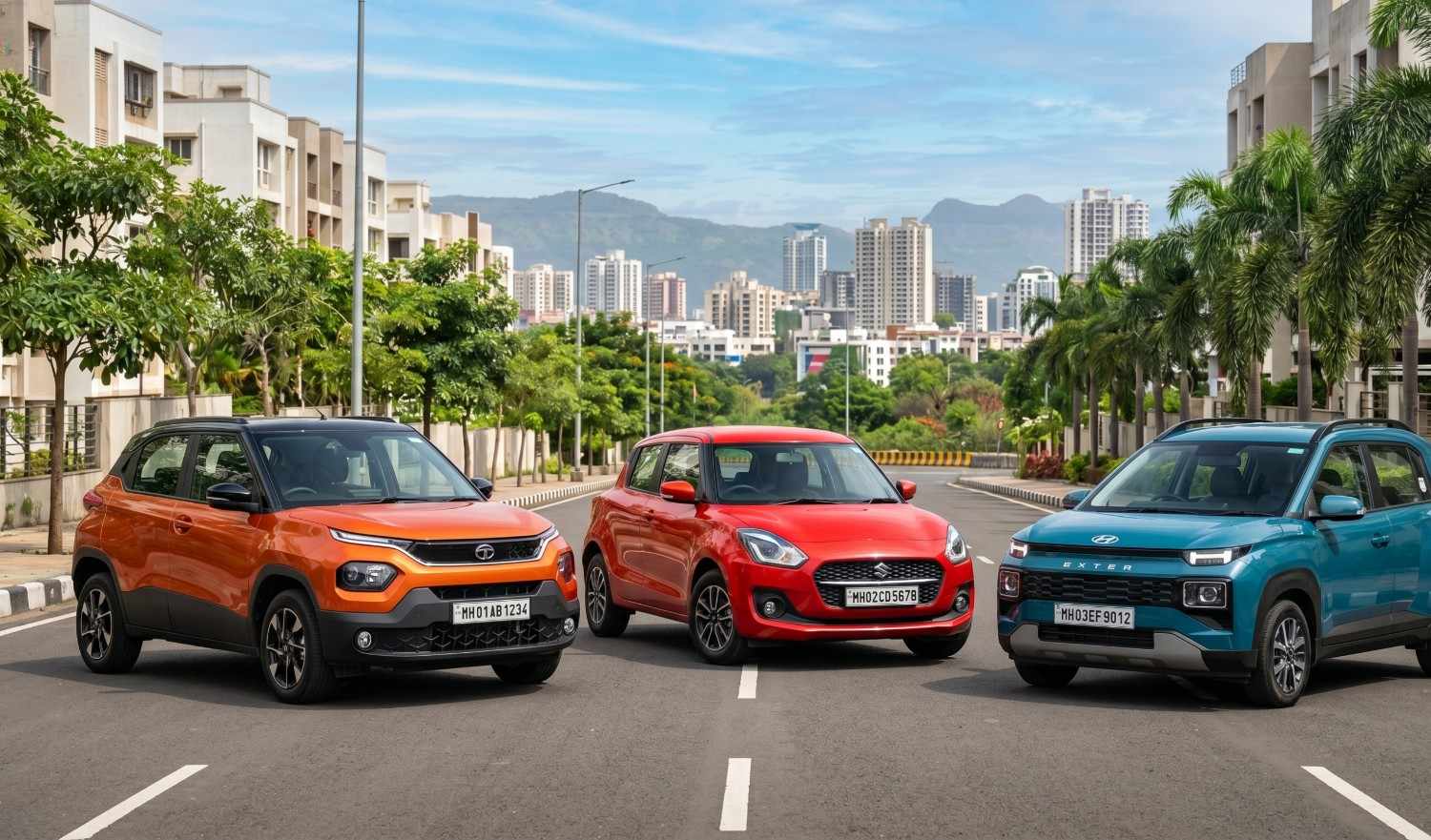
Looking for a Tata Punch vs Maruti Swift and other comoetition cars comparison? Here are 7 reasons this 2026 guide is the ultimate car buying resource.
The Indian automotive landscape has shifted dramatically over the last few years. Buyers no longer look at cars through a single lens; they demand SUV-like road presence, bulletproof fuel economy, high-tech features, and uncompromised safety without crossing the ₹10 lakh barrier.
If you are currently evaluating your options in this hyper-competitive segment, you are likely stuck in a classic dilemma: Should you buy the rugged micro-SUV from Tata, choose the dynamically engaging hatchback from Maruti, or look at what else the market has to offer?
In this deep-dive automotive review, we break down the tata punch vs maruti swift and other competition cars to help you make an informed investment. As an automobile specialist who has put thousands of kilometers on these machines, I will guide you past the marketing fluff and focus strictly on real-world performance, structural durability, long-term maintenance costs, and cabin ergonomics.

Table of Contents
- The Battleground: Segment Dynamics
- Tata Punch: The Micro-SUV Disrupter
- Maruti Suzuki Swift: The Dynamic Hatchback King
- Analyzing the Field: Other Competition Cars
- Head-to-Head Technical Comparison Matrix
- Feature Showdown: Advanced Tech & Cabin Comfort
- Durability, Build Quality, and Safety Ratings
- Real-World Performance & Fuel Efficiency
- The Expert Verdict: Which Car Should You Buy?
- Frequently Asked Questions (FAQs)
1. The Battleground: Segment Dynamics
The pricing overlaps in the Indian auto sector have created a fascinating cross-segment war. On one hand, you have micro-SUVs offering a high seating position and high ground clearance; on the other, premium hatchbacks provide aerodynamic stability, sharper handling, and superior fuel efficiency.
When analyzing tata punch vs maruti swift and other comoetition cars, we aren’t just comparing sheets of metal. We are comparing two completely different vehicular philosophies designed for the same wallet.
2. Tata Punch: The Micro-SUV Disrupter
The Tata Punch completely redefined what a budget car could look like in India. Built on the high-strength ALFA-ARC platform (Agile Light Flexible Advanced Architecture), the Punch presents a commanding silhouette that mimics its larger sibling, the Harrier.
New Features & Cabin Upgrades
The latest iterations of the Tata Punch have closed the gap in terms of interior premiumness. It now includes:
- A 10.25-inch Touchscreen Infotainment System with crisp graphics, replacing the older 7-inch unit on premium trims.
- A Touch-Operated HVAC Panel that gives the central console a sleek, modern look.
- A 360-Degree Camera System & Blind View Monitor to make navigating tight city lanes exceptionally easy.
- A Voice-Assisted Electric Sunroof to cater to popular consumer demand.
- Enhanced Seating Ergonomics featuring extended thigh support across all trims for better long-distance driving comfort.
Powertrain & Mechanical Setup
Under the hood, the Punch features a 1.2L, 3-cylinder Revotron petrol engine generating 86 bhp of power and 115 Nm of torque. It comes paired with either a 5-speed manual or a 5-speed AMT. For cost-conscious buyers, Tata’s clever Twin Cylinder iCNG technology packages two smaller tanks under the boot floor, preserving functional luggage space while running on cheaper fuel.
3. Maruti Suzuki Swift: The Dynamic Hatchback King
Few badges command as much loyalty in India as the Maruti Suzuki Swift. Known for its fun-to-drive nature, the Swift recently transitioned to its latest generation, introducing structural changes and a completely new powertrain.
New Features & Technological Inclusions
The new Swift has abandoned its old platform elements to focus heavily on modern electronics:
- A 9-inch SmartPlay Pro+ Touchscreen featuring wireless Apple CarPlay and Android Auto connectivity.
- A Dedicated Wireless Phone Charging Pad positioned conveniently ahead of the gear shifter.
- Standard Safety Tech including 6 Airbags, Electronic Stability Program (ESP), and Hill Hold Assist standard across every variant.
- Rear AC Vents paired with an updated automatic climate control system to improve rear-seat cooling.
Engine Dynamics: The Z-Series Paradigm
Maruti replaced the old 4-cylinder K-Series engine with the new 1.2-litre, 3-cylinder Z12E engine. While purists missed the absolute top-end punch of the old four-cylinder motor, this engine is optimized for city performance. It produces 80.4 bhp of power and 111.7 Nm of torque.
The primary takeaway of this engineering change is its efficiency: it stretches a single liter of petrol further than almost anything else in its class.
4. Analyzing the Field: Other Competition Cars
To get a complete view of the market, our comparison of tata punch vs maruti swift and other comoetition cars must include the alternative choices in this price range.
Hyundai Exter
The Exter is Hyundai’s direct response to the Tata Punch. It matches the Punch’s boxy micro-SUV styling but uses a more refined 1.2L 4-cylinder Kappa engine. The Exter sets itself apart with an integrated dashcam, a very quiet cabin experience, a tyre pressure monitoring system (TPMS), and a smooth optional AMT gearbox.
Hyundai Grand i10 Nios
The Grand i10 Nios serves as a direct competitor to the Swift. It provides a premium, well-appointed cabin, excellent fit and finish, and a smooth 4-cylinder engine. It is ideal for drivers who prefer a mature, relaxed urban driving experience over a sporty setup.
Maruti Baleno
If you can stretch your budget slightly toward the mid-to-high variants of the Punch or Swift, the base and mid-spec trims of the larger Maruti Baleno become accessible. The Baleno offers a wider cabin, significantly more rear legroom, and a highly efficient 4-cylinder engine.
5. Head-to-Head Technical Comparison Matrix
To simplify the details of the tata punch vs maruti swift and other comoetition cars, let’s look at the baseline technical specifications side by side.
| Specification Parameter | Tata Punch (2026 Facelift) | Maruti Suzuki Swift (Latest Gen) | Hyundai Exter | Hyundai Grand i10 Nios |
| Engine Configuration | 1.2L, 3-Cylinder Revotron | 1.2L, 3-Cylinder Z12E | 1.2L, 4-Cylinder Kappa | 1.2L, 4-Cylinder Kappa |
| Max Power Output | 86 bhp @ 6000 rpm | 80.4 bhp @ 5700 rpm | 82 bhp @ 6000 rpm | 82 bhp @ 6000 rpm |
| Max Peak Torque | 115 Nm @ 3250 rpm | 111.7 Nm @ 4300 rpm | 113.8 Nm @ 4000 rpm | 114 Nm @ 4000 rpm |
| Ground Clearance (Unladen) | 193 mm | 163 mm | 170 mm | 165 mm |
| Boot Volume Capacity | 366 Liters | 265 Liters | 391 Liters | 260 Liters |
| Claimed Petrol Mileage | 18.9 – 20.9 kmpl | 24.8 – 25.75 kmpl | 19.4 kmpl | 20.1 kmpl |
| CNG Fuel Alternatives | Yes (Twin Cylinder) | Yes (Single Cylinder) | Yes (Dual Cylinder) | Yes (Single Cylinder) |
| Base Price Range (Ex-Sh) | ~₹5.65 Lakh onwards | ~₹5.79 Lakh onwards | ~₹5.80 Lakh onwards | ~₹5.92 Lakh onwards |
6. Feature Showdown: Advanced Tech & Cabin Comfort
When comparing the tata punch vs maruti swift and other comoetition cars, the cabin experience is where these vehicles target different buyers.
Team Punch: Practical Utility and Visibility
Step into the Tata Punch, and the first thing you notice is the high seating position. You get an excellent view of the road ahead, looking over the hood just like in a traditional SUV.
The 90-degree opening doors make getting in and out effortless, which is a major benefit if you frequently travel with elderly family members. The 366-liter boot is deep and highly practical. With the inclusion of a 10.25-inch infotainment screen and ventilated wireless charging, the tech experience feels premium.
Team Swift: Driver-Centric Ergonomics
The Swift takes a completely different approach. It places you lower to the ground in a classic cockpit layout. The central console is tilted slightly toward the driver, emphasizing its sporty character.
The front bucket seats wrap around you well, providing great lateral support when taking sharp corners. However, the rear bench can feel tight for three adults, and the smaller 265-liter boot struggles with large family holiday luggage.
Specialist Takeaway: If your usage involves driving through waterlogged roads, rough gravel, or broken urban tarmac, the Tata Punch’s 193 mm ground clearance gives it a distinct advantage over the Swift’s lower 163 mm clearance.
7. Durability, Build Quality, and Safety Ratings
This is a critical area where the tata punch vs maruti swift and other comoetition cars diverge based on manufacturing priorities.
The Structural Safety Analysis
- Tata Punch: Built on the ALFA architecture, the Punch historically secured a full 5-Star Global NCAP safety rating. Even with updated, more stringent crash testing rules, its body shell remains very stable. The heavy doors and solid thud upon closing provide reassurance regarding structural strength.
- Maruti Swift: Maruti has reinforced the latest generation of the Swift by adding 6 structural airbags as standard safety equipment. While this protects occupants well during a secondary impact, the vehicle’s sheet metal remains relatively thin to optimize fuel efficiency, impacting its overall structural feel.
- The Competition (Hyundai): Both the Exter and the Grand i10 Nios offer 6 standard airbags. Structurally, they sit comfortably between the solid build of the Tata and the lightweight construction of the Maruti.
8. Real-World Performance & Fuel Efficiency
City Drivability
In stop-and-go city traffic, Maruti’s Z-Series 3-cylinder engine performs very well. The engine offers smooth low-end torque, requiring fewer gear shifts to keep moving.
The Tata Punch’s Revotron engine feels a bit heavier low down in the rev range. While it handles traffic easily, it requires a firmer press on the throttle when accelerating from a dead stop with the air conditioning running at full blast.
Highway Performance
On the open highway, the differences become clear:
- The Maruti Swift behaves like a traditional European hatchback. It stays planted at high speeds, and its low center of gravity keeps body roll well controlled through tight corners.
- The Tata Punch handles rough road patches and expansion joints comfortably. Its robust suspension absorbs deep potholes smoothly. However, due to its tall, boxy design, you will notice more body roll when taking high-speed highway curves compared to the Swift.
Fuel Efficiency: The Financial Reality
If fuel economy is your top priority, Maruti remains tough to beat. In real-world urban testing, the Swift regularly returns between 16 to 18 kmpl, jumping up to 22+ kmpl on highways.
The Tata Punch is heavier and more structurally dense, averaging 13 to 15 kmpl in city traffic and 17 to 18 kmpl on the highway.
9. Tata Punch vs Maruti Swift and Other Comoetition Cars: 7 Reasons This Is the Ultimate Guide
To settle the score on why this resource provides everything you need to know, let’s look at the 7 ultimate takeaways defining this automotive class:
- Safety is No Longer Optional: Tata led the change by offering a 5-star shell on the Punch. This forced Maruti and Hyundai to step up and provide 6 airbags as standard across all variants.
- Ground Clearance Matters: The Punch (193 mm) and Exter (170 mm) laugh at severe potholes. The Swift (163 mm) requires you to slow down significantly to protect its underbelly.
- The Cylinder Count Paradox: The Hyundai Exter relies on a smooth 4-cylinder motor. Meanwhile, the Punch and Swift use 3-cylinder engines that prioritize torque and efficiency over idle refinement.
- Boot Space Realities: If you travel with family, the Swift’s 265-liter boot feels inadequate. The Punch (366L) and Exter (391L) handle luggage much better.
- CNG Evolution: Gone are the days of losing your entire trunk. Thanks to dual-cylinder tech in the Punch and Exter, you can save money on fuel without sacrificing your bags.
- Feature Saturation: Screens have gotten massive. The Punch leads with its crisp 10.25-inch display, while the Swift matches it in terms of completely wireless software performance.
- Resale and Maintenance: Maruti still holds the crown for long-term ownership ease. A Swift will always sell faster and retain a higher percentage of its value in the used car market than almost any competitor.
10. Frequently Asked Questions (FAQs)
Q1: Which car has better safety between the Tata Punch and Maruti Swift?
The Tata Punch has a stronger structural reputation, built on the ALFA-ARC platform which scored a 5-star rating in Global NCAP crash tests. The Maruti Swift comes equipped with 6 airbags as standard across all variants to improve passenger safety, but its sheet metal and overall body shell feel lighter.
Q2: What is the real-world mileage difference in tata punch vs maruti swift and other comoetition cars?
The Maruti Swift leads the segment with a real-world city mileage of around 16–18 kmpl and over 22 kmpl on highways. The Tata Punch typically delivers 13–15 kmpl in the city due to its heavier build. Comoetition cars like the Hyundai Exter and Grand i10 Nios average around 14–16 kmpl in city conditions.
Q3: Does the Tata Punch offer better luggage capacity than the Maruti Swift?
Yes, the Tata Punch offers a significantly larger and more usable 366-liter boot compared to the Maruti Swift’s 265-liter boot. Additionally, Tata’s Twin-Cylinder CNG technology ensures that even if you choose a green fuel option, you retain a functional amount of luggage space.
Q4: Is the new 3-cylinder engine in the Swift less refined than the older 4-cylinder model?
The new Z12E 3-cylinder engine in the Swift is highly optimized for fuel efficiency and low-end city torque. While you might notice a slight vibration at idle when compared to the older, exceptionally smooth 4-cylinder K-Series engine, it smoothens out perfectly once you are on the move.
Q5: Which car handles bad roads better?
The Tata Punch is much better suited for rough roads and deep potholes thanks to its high 193 mm ground clearance and robust suspension tuning. The Maruti Swift has a lower ground clearance of 163 mm, making it better suited for smooth highways and paved urban roads.